WigglePost · Words & how-tos
Inside-Joke Card Ideas: Turn a Shared Memory Into a Picture
Take one object from the memory, make it do one ridiculous thing, and give it a short headline. That's enough for an inside-joke greeting card. You don't need to illustrate every person, place, and plot twist involved.
For example: two friends once spent an entire afternoon arguing over a stubborn jar lid. A jar lifting weights is a picture they might recognize immediately. “Still training for the rematch” gives the image a caption. The note can simply say, “Thought of our pickle-jar showdown. Very glad I have you for these important events.”
That story is invented to show the method. Your card should use a memory you both enjoyed, not a story copied from this page.
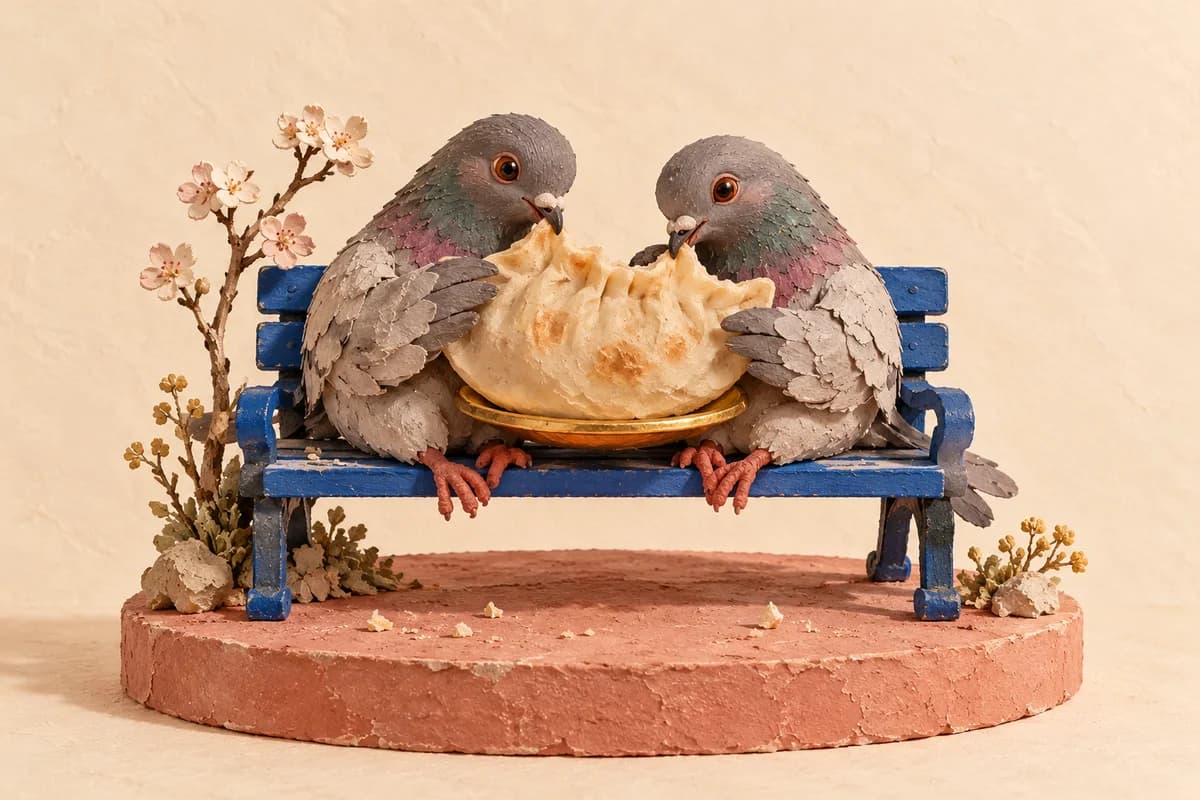
Find the object before you write the joke
Write the memory in one ordinary sentence. Then circle a thing you could draw: a jar, an umbrella, a sock, a chair. If you only have an abstract idea such as “we're chaotic,” think of a particular time that felt true.
A recognizable object anchors the picture. Its action supplies the exaggeration. The headline can stay short because your friend already knows the background.
Here are four complete chains you can adapt.
The jar that won
Memory: You both tried opening a jar and eventually asked a neighbor.
Object: The jar, with its distinctive green lid.
Absurd action: It is lifting a tiny barbell, training for another encounter.
Headline: “Still training for the rematch.”
Note: “I remain impressed by our determination and unconvinced by our technique. Thanks for making that afternoon so funny.”
This works when the failure belongs to both of you. If one person felt embarrassed, choose something else. Change the jar's color or contents to the actual detail you remember; those small clues matter more than adding a crowd of cartoon people.
The umbrella with other plans
Memory: Your umbrella turned inside out on a windy walk, and you both laughed under a doorway.
Object: The umbrella.
Absurd action: It floats proudly like a little sailboat.
Headline: “Always wanted to be a boat.”
Note: “Remember the walk where our weather equipment changed careers? I'd still choose your company in questionable conditions.”
You could replace the umbrella with a picnic blanket that kept blowing away. Keep the joke about the object, not about who checked the forecast. A whole storm scene would be harder to read than one determined umbrella.
The sock with a career
Memory: A bright sock accidentally appeared in the background of an otherwise polished video call and became a running joke.
Object: The recognizable striped sock.
Absurd action: It sits behind a tiny desk, chairing a meeting.
Headline: “A natural leader.”
Note: “I see the sock has been promoted again. Thanks for the running joke that still improves my day.”
Keep other people and confidential work out of the picture. You only need the sock. If the original moment was awkward for your friend, don't preserve it in a card just because you found it funny.
The chair you kept defending
Memory: A wobbly vacation-rental chair became everyone's favorite despite its limitations.
Object: The chair's unusual shape.
Absurd action: It sits on a throne, surrounded by a small velvet rope.
Headline: “Please respect the furniture.”
Note: “A tribute to the chair we refused to give up on. That weekend still makes me smile.”
The image can preserve a shared fondness without copying the entire rental interior. Use a different well-loved object if that's what your memory contains: a cracked planter, an ancient radio, or a beach bucket with unexpected importance.
Keep one layer of explanation
A stranger doesn't have to get the joke. Your friend does. If the headline requires several paragraphs of background, return to the clearest object or phrase from the memory.
Let the note do a different job from the picture. It can say you miss them, thank them, or celebrate a birthday. For that last option, add an actual birthday wish; the playful birthday guide has examples of balancing a joke with the occasion.
Before making the card, check that the joke is shared and still welcome. Private embarrassment, an old disagreement, and a nickname they dislike aren't useful shortcuts to specificity.
Start an inside-joke card with your single scene. The link selects a starting direction, not one of these custom pictures. You can bring the words into a card with ready-made artwork or check the studio's current illustration options. The personal card walkthrough explains the difference.